Where current production data is missing
A shift manager sees a drop in productivity only in a spreadsheet prepared after the shift ends. Machine data, the production plan, and downtime information use different identifiers, so finding the cause requires conversations with several people. After integration, a shared data model shows the result, the event context, and the person responsible for the next step.
A maintenance employee receives a failure report by phone, while the equipment documentation and repair history are stored elsewhere. After implementation, the failure has a status, priority, owner, deadlines, and a complete set of attachments. An alert from a system or report starts a task, and closing the case updates the equipment history.
A buyer checks a material invoice, purchase order, warehouse receipt, and supplier data in several systems. Once connected, the document enters the correct workflow, discrepancies are visible during approval, and approved data returns to the ERP system without manual retyping.
A salesperson receives an order by email and looks up product data in the ERP system before passing the case to planning. After the change, the message creates a case, ERP data populates the form, and the proposal and order share a status, history, and accountability.
Production, ERP, and document data in one process
We first map the path from an event to a decision: a machine signal, customer order, material requisition, supplier document, or quality variance. We determine which data originates in manufacturing and ERP systems, who checks it, and where the result should be returned. We then connect AI, AMODIT, the data and BI layer, custom applications, cloud services, and the ERP, warehouse, and manufacturing systems already in use.
AI reads documents, organizes information, and flags exceptions that require attention. In data analysis, it prepares an explanation of a variance and a recommendation for the next action. An authorized employee reviews the result and approves the decision. We configure existing models for the company’s process and environment; we do not train our own LLM or OCR models.
Integrations transfer documents, identifiers, and statuses through available APIs, files, queues, or database-to-database exchange according to agreed rules. Each system retains its role, and the user does not move the same information between applications. When a standard system does not support an essential gap, we build an application or connector tailored to the process.
Why AMODIT is a strong choice for industry and manufacturing
AMODIT routes a case through roles, plants, and stages, connecting a document with data from the ERP, warehouse, manufacturing system, or equipment. The process includes rules, deadlines, substitutes, change history, and permissions. We develop it as the organization changes: adding a company, plant, cost type, approval path, integration, or new exception handling.
In a manufacturing company, the platform connects requisitions and orders, material and operating expense invoices, contracts, proposals, failure reports, quality cases, correspondence, and employee requests, among other processes. Astrafox is AMODIT’s developer and implementation team, so one company is responsible for the product, configuration, integrations, and continued development. The AMODIT page describes the platform’s detailed capabilities, while Astrafox designs the complete workflow in the client’s environment.
Processes connected to production
This page presents a cross-functional view of the industry. Detailed processes, common situations, and the scope of integrations are covered on the solution pages:
- Invoice and purchase workflow — connecting an invoice with an order, warehouse receipt, cost center, project, or work order and sending data to accounting.
- Purchasing, requisitions, orders, and budgeting — from a material or investment need through offers and approval to the order and budget settlement.
- Sales, orders, and customer service — handling inquiries, proposals, and orders connected to ERP, planning, warehousing, and fulfillment information.
- Contracts and legal — negotiations, approvals, obligations, and deadlines in contracts with suppliers, customers, and partners.
- Mailroom, correspondence, and archive — a correspondence register for multiple plants and companies, control over case handoffs, and a shared archive.
- Requests, business travel, and administration — employee requests, business trips, equipment, permissions, and other administration matters.
- HR and electronic personnel files — employment documentation, file completeness, access for the correct roles, and integration with the HR system.
- Electronic signatures — signing contracts, protocols, and employee documents without manually transferring files.
Automotive has its own sales, dealership network, and service context. Explore automotive industry solutions.
Production analytics and reporting
A production report is reliable only when it covers the entire data path: acquisition, cleansing, integration, storage, and visualization. Machine data has technical identifiers, different frequencies, and its own event definitions. We combine it with the plan, production orders, material consumption, warehouse data, quality control, and information about planned and unplanned downtime.
If equipment does not provide a ready-made connection, we develop a custom connector. It removes intermediate spreadsheets and feeds the data layer automatically. Together with the production team, we then interpret fields, separate relevant signals from noise, and map data to the line, machine, product, and process stage. For multiple pieces of equipment, we design a consistent model instead of simply joining tables by one key.
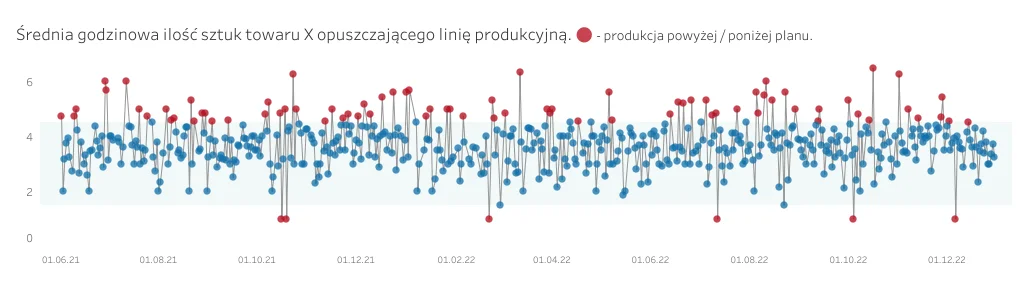
We store and process data in an architecture selected for the company’s environment—in the cloud, on the organization’s servers, or in a hybrid model. The report shows the current condition of the process and the broader analytical picture: plan attainment, productivity, downtime, costs, and quality. It also shows production flow between stages, material consumption, production waste, and whether inventory issues follow FIFO rules. Power BI, Tableau, or another BI tool already in use remains the presentation layer, while an organized data model provides shared metric definitions.
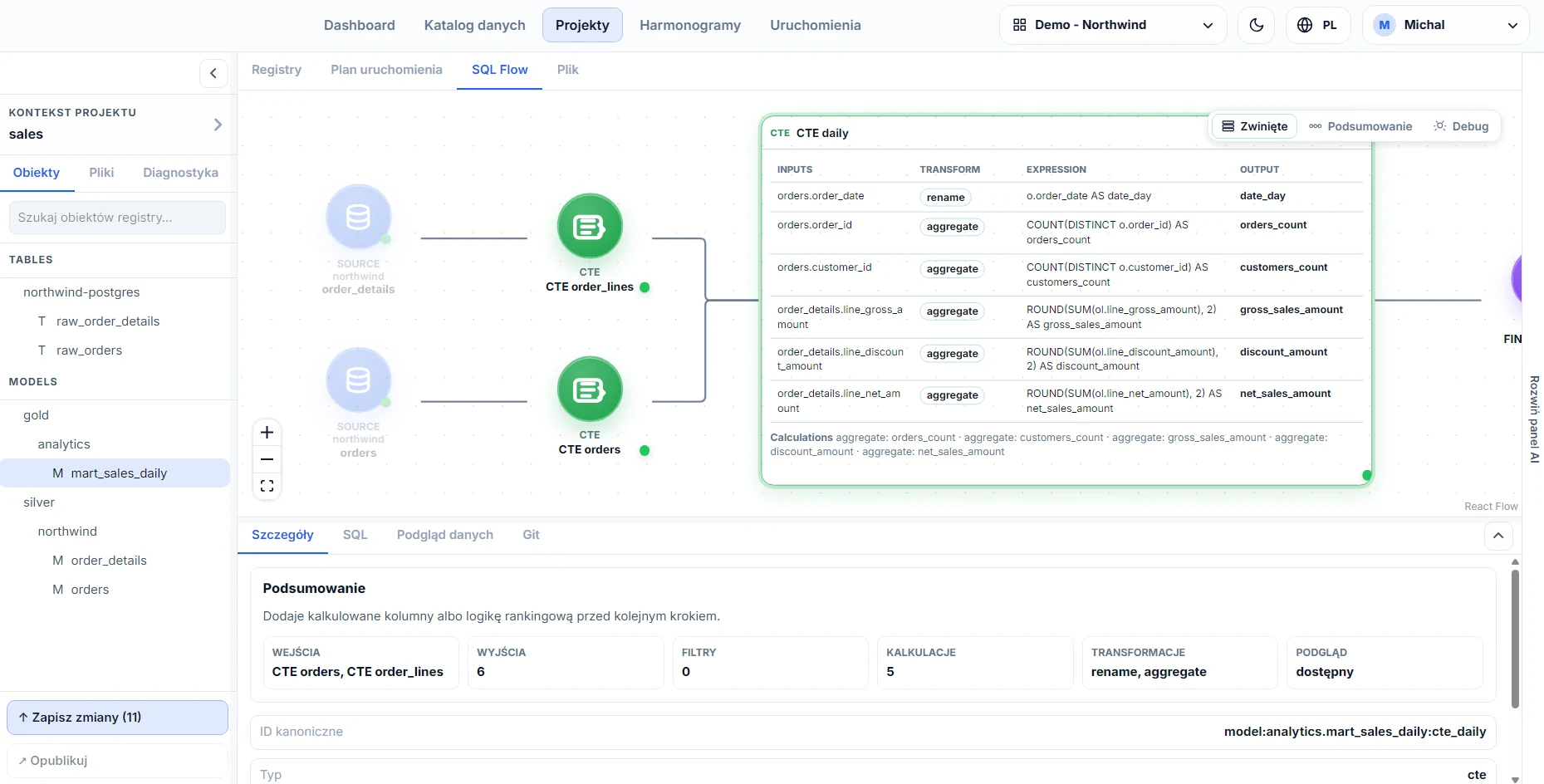
Explore Data & BI solutions → · See production control · See machine failure reporting · See material requirements planning
Examples of completed solutions
Proposals and orders connected to SAP
For an industrial manufacturer, we connected proposal and order handling with SAP data and email. A message creates a case, system data populates dictionaries, and two multistage processes route the proposal and order through the correct roles. The status, person responsible, and history are visible in one place, so the team does not have to forward messages and attachments between inboxes.
A material invoice checked against an order and delivery
For a manufacturing group, we implemented a workflow in which extracted invoice data is compared with the order, requisition, and delivery document in the ERP system. Discrepancies are routed for review, and the approved document returns to the financial system and archive. The same workflow handles documents in several languages and additional companies in the group.
Production reports based on multiple sources
In BI projects, we support the development of production reports covering output, material consumption, and data required by product development teams, among other areas. We organize data feeds, the model, and metric definitions, so the report is not an isolated chart but a shared view of the process for production and management.
Why Astrafox provides comprehensive solutions for industry and manufacturing
Since 1999, we have combined AI, process automation, data and BI, software, integrations, ERP, and cloud services. We have completed 1,100+ implementations. One team is responsible for the flow between equipment, documents, applications, and reports, and every project has named account, project, and deputy managers.
We build the solution around the systems already in use and take responsibility for the application, integrations, and infrastructure. The client has one agreement and one point of accountability even when the process spans several technologies. We adjust the scope without multilayered procedures when production, plant structure, or customer requirements require a new path.
Other industries and team perspectives
Manufacturing connects planning, purchasing, operations, sales, and systems maintenance. Explore all industry solutions, as well as pages for transportation and logistics, retail, wholesale, and consumer goods, pharmaceuticals and healthcare, financial services and insurance, automotive, and renewable energy.
The Finance & Controlling, IT, and Management solution pages provide team-specific perspectives.
Frequently asked questions
Which systems integration should we start with?
We start with the entire workflow: the event, document, data, roles, and exceptions. We then integrate AMODIT and the appropriate Astrafox solutions with the ERP, manufacturing, warehouse, HR, and BI systems and equipment already in use. Each system retains its role, while statuses and data move between them without manual retyping.
Do we need to replace our current ERP or manufacturing system?
No. If the current system performs its role well, we integrate it with the process, documents, and reporting. We build a new application or connector for a gap that cannot be addressed through configuration or a standard connection.
How does AMODIT support manufacturing companies?
AMODIT routes requisitions, purchases, invoices, contracts, proposals, orders, tickets, and requests through the correct roles, plants, and stages. It connects documents with data from ERP and other systems while preserving history, deadlines, substitutes, and permissions.
How do you collect and report machine data?
We check the available equipment and system interfaces and develop a connector when a ready-made connection is unavailable. Data is cleansed, mapped to machines and production stages, combined with the plan, and stored in the selected architecture. The report uses shared metric definitions and shows the event context.
How does AI work in manufacturing processes?
AI reads and organizes documents, flags exceptions, and prepares explanations and recommendations based on available data. A person reviews the result and approves the next action, while the system preserves rules, roles, and decision history.
Where should a project at a manufacturing plant begin?
Start with one process that regularly requires combining data from several sources or manually establishing accountability. For the first discussion, the current workflow, a list of systems, and an example document, report, or event where work most often stops are enough.