From document to decision without gaps between systems
Accounting, controlling, and purchasing work with the same costs, but often see them at different times and in different tools. An invoice waits for its cost owner. Budgets are prepared in multiple spreadsheets. ERP data must be combined with sales and operations data before a report can be created. When teams define margin or revenue differently, meetings begin with reconciling numbers instead of making decisions.
We design a flow in which every document has an owner, every approval leaves a record, the ERP receives approved data, and reports use agreed measures. Exceptions go to the person responsible for explaining them. Finance sees not only posted costs but also purchase requisitions, budget reservations, pending documents, and payment status.
Situations we organize
- An invoice without a cost owner. The process identifies the company, cost center, project, and correct approval path, while accounting sees the current status.
- Budgets in different spreadsheet structures. Data enters a shared model, passes controls, and is compared with actuals according to the same rules.
- The same KPI calculated in two different ways. Measure definitions are maintained in the data layer instead of analysts’ private files.
- A report shows a variance but does not trigger action. A data signal initiates a task, explanation, or approval and preserves the decision history.
AI prepares, finance approves
AI reads invoices and attachments, organizes data, and flags missing or unusual values. In analysis, it prepares an explanation of a metric change and suggests questions for verification. The responsible person checks and approves the output before posting, payment, or further processing.
We do not add a separate tool merely to “have AI.” We configure existing models and embed them in a process with roles, permissions, and a change history. As a result, AI prepares a recommendation based on the right data and has a clearly defined point of human review.
Explore AI solutions for business →
One financial flow from need to settlement
Invoices, KSeF, and posting
We implement a workflow from retrieving a document from KSeF (Poland’s National e-Invoicing System), email, or a scan through data checks, cost description, invoice coding, and approval to transfer to the financial system, payment, and archiving. We handle corrections, pro forma invoices, advance and foreign-currency invoices, documents without a purchase order, and different paths for companies, branches, and cost types.
AMODIT guides people through roles and decisions, while KSeF Connector connects KSeF with any ERP or accounting system for companies operating in Poland. Data and statuses return to the process, so accounting does not have to manually reconstruct the stage of each document.
Explore purchase invoice and purchasing workflows →
Purchasing, budgets, and commitments
We connect purchase requisitions, available-budget checks, supplier selection, purchase orders, receipts, and invoices. The cost is reserved before the purchase. Approval matrices route the case according to amount, company, project, cost center, or budget owner, while rules trigger a new decision after a request changes.
Finance sees the plan, reservations, budget used and available, and documents not yet posted to the ledger. The invoice remains connected to the business justification, purchase order, receipt, and approval history.
Explore purchasing processes and budgeting →
Analytics and reporting based on shared logic
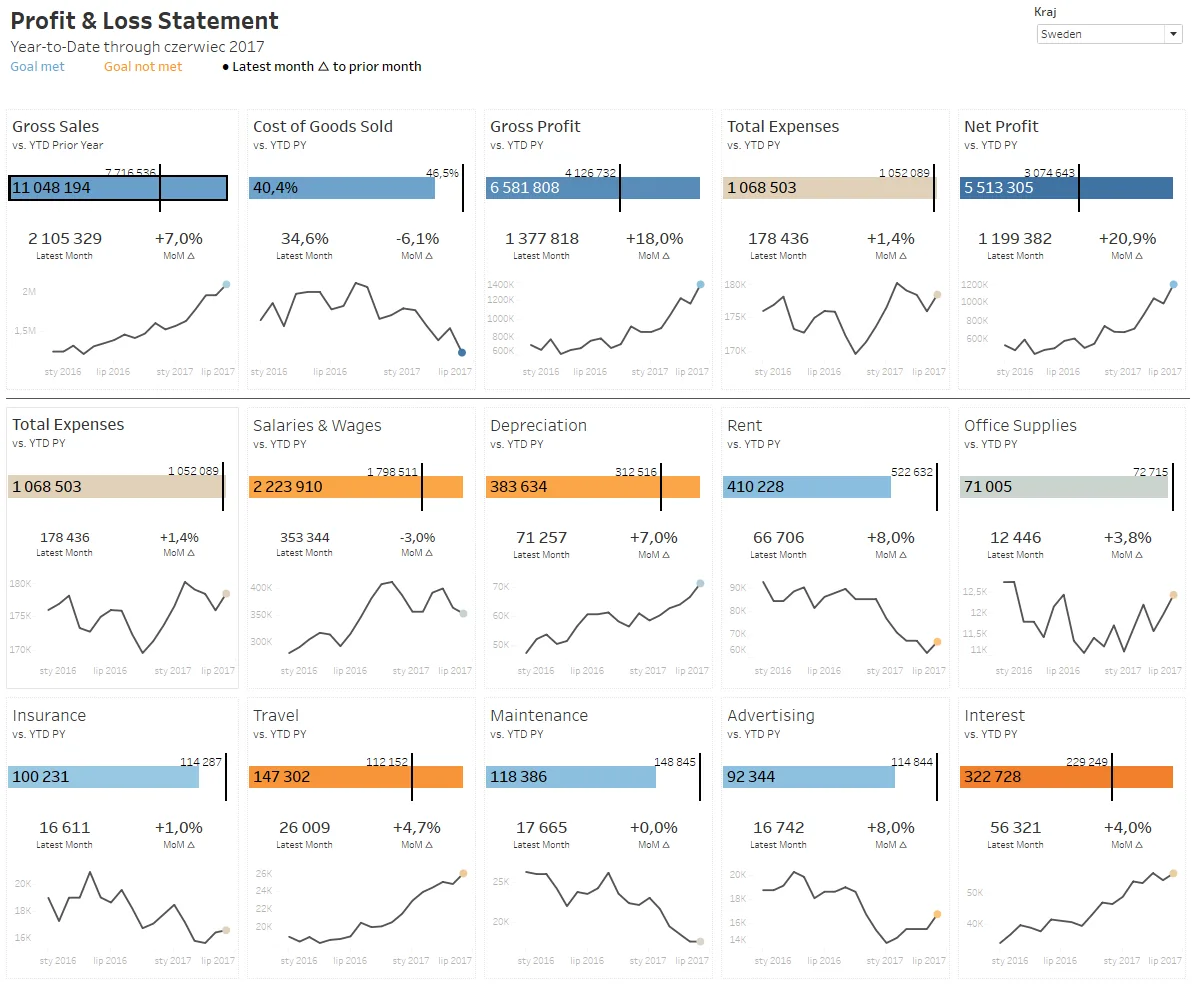
We preserve what has been at the core of our work for controlling for years: we acquire and clean data from ERP systems, spreadsheets, warehouse and sales systems, and other operational sources. We combine it in a model aligned with the organization’s reporting policy, automate data refresh and information distribution, and build reports for CFOs, controllers, managers, and management boards.
Reporting covers areas including:
- revenue, costs, margin, and profit,
- budget, actuals, forecasts, and variances,
- receivables, payables, and payment aging,
- profitability of companies, projects, products, locations, and customers,
- costs by account, cost center, department, and initiative,
- status of invoices, purchase orders, reservations, and cases that require action.
From spreadsheets to controlled data pipelines
DataFlow automates data preparation, runs tests, and shows data lineage. An analyst sees the source of a number and which reports depend on a changed field. The flow does not remain on one person’s computer, and the analyst reviews changes before publication.
We build the analytics layer in technologies including Power BI, Tableau, and Qlik. Technology selection follows the current environment, user needs, and maintenance model. We implement reports modularly: from one area and the first target view to a shared financial model for additional business units.
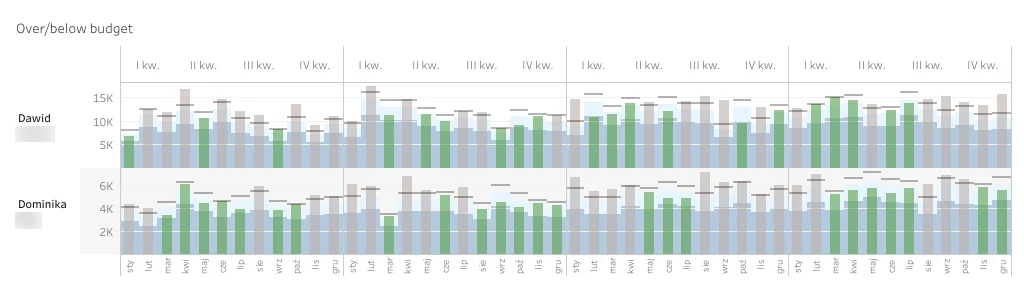
Explore reports and dashboards →
Integrations without replacing the entire environment
We connect AMODIT, KSeF Connector, the data layer, and reports with the ERP, financial and accounting, banking, purchasing, and operational systems already in use. Integrations exchange master data, dictionaries, documents, invoice coding, posting or payment statuses, and data required for analysis. We use available interfaces: APIs, web services, controlled database exchange, or files.
ERP remains the financial system of record. The process handles the document and decision, while BI combines information for analysis. This separation of roles allows the department to improve its work without replacing all proven systems at once.
Explore software and integrations →
Explore finance and accounting in Comarch ERP XL →
Examples of completed solutions
Invoices across a distributed network of locations
We built a platform that combines invoice creation and import, validation, queues for transferring documents to a central financial and accounting system, status synchronization, and an archive. Users work with one source of information, and access follows their location and role.
Documents from multiple systems in one required format
An integration layer retrieves data from files and databases, maps different structures, checks completeness, and shows processing status. Existing source systems remain part of the environment, while errors are detected before a document is passed on.
Financial and operational reports based on shared data
In BI projects, we combine data on costs, sales, receivables, budgets, and forecasts. Users move from an aggregate result to the transaction or case that explains it instead of reconciling multiple spreadsheet versions.
Explore Astrafox case studies →
Why AMODIT for finance and controlling?
AMODIT combines forms, documents, rules, roles, approvals, and decision history. A process begins with an invoice, purchase requisition, budget change, or exception detected in a report. Integrations send approved data to the ERP and retrieve statuses, while the finance team works with the full context of the case.
On the Astrafox website, we present implementation across the entire company environment: integrations with ERP, KSeF, banks, and the data layer, along with launch, development, and maintenance. The AMODIT page contains a complete description of product features.
Explore AMODIT and our implementation model →
Why Astrafox for finance and controlling?
One team combines AI, Process Automation, Data & BI, integrations, ERP, and cloud capabilities. Every project has a named account manager, project manager, and deputy. One contract and one point of accountability cover the flow from documents through systems to reports, while after launch we provide ongoing development and SLA-based support for the application and its connections.
This approach is particularly effective when a process spans several systems, a report must lead to action, and a standard product needs an integration or a solution tailored to the organization.
See why companies choose Astrafox →
Finance solutions across industries
Explore all industry solutions and examples for retail, wholesale, and consumer goods, manufacturing, and finance and insurance. They show how data sources, documents, and financial rules differ according to the company’s business.
Frequently asked questions
Where should a company start improving finance and controlling?
Start with a process in which manually combining documents and data causes delays or reduces control. The first stage can cover one invoice type, a budgeting workflow, a data pipeline, or a report. We design it so that additional companies, documents, and sources can be added later.
Why does AMODIT work well for financial workflows?
It guides a document through roles, rules, and approvals, preserves the history, and connects the process with KSeF, ERP, and reporting. Users see the current stage, responsible person, and decision context.
Does the solution work with an ERP other than Comarch?
Yes. We integrate processes with any ERP and accounting system that provides a controlled method of data exchange. The connection scope follows the available API, web services, staging database, or files.
Does AI post and approve documents autonomously?
No. AI prepares data, identifies variances, and recommends a classification. The responsible person verifies the output and approves the next step in the process.
How can budgeting be connected with invoices and purchasing?
The process reserves funds at the purchase requisition or purchase-order stage, updates their use after subsequent events, and links the invoice to the earlier decision. Controlling sees the plan, reservations, actuals, and overruns in the same dimensions.
Why is Astrafox accountable for the entire flow?
We combine expertise in processes, AI, Data & BI, software, integrations, ERP, and infrastructure. Accountability covers not only an individual system but also its connections and solution maintenance.