Number of processes and variants
Steps, exceptions, escalations, and differences between companies or departments.
We organize workflows, documents, and decisions, implement our AMODIT platform, and connect it to AI, any ERP, HR and payroll systems, and reporting. We start with the problem in the process, not a list of features.
Each situation shows what consumes time today and what the same work looks like after the change.
A director approves an expense on a phone but cannot see the earlier discussions.
The director approves the expense on a phone and sees all earlier discussions in the case.
The full context for a decision in one case
The mailroom logs a letter in a spreadsheet, while the response deadline gets lost in email.
The letter enters a process with a response deadline and an assigned owner, and the approaching deadline is visible in advance.
Correspondence workflow with deadlines
A manager reports a new hire, but IT finds out one day before the start date.
IT receives a task when the new hire is reported and sees the deadline for preparing equipment and access.
Cross-department onboarding
Several lawyers review separate copies, and no one knows which version is final.
The lawyers review the same contract in parallel, and one final version is visible to everyone.
Parallel contract review
An employee searches for the right form and asks colleagues what to do next.
An AI assistant suggests the right form and next step, and the employee decides what to do.
Copilot in a process
An administrator closes a request, but the work history remains in a private inbox.
The request has a complete work history in one place, available to authorized users.
IT requests with a complete history
The same data is entered several times. Documents circulate in multiple versions. No one knows where a case stands or who is handling it. A deadline becomes visible only after it has passed.
We do not start by automating chaos. We first define roles, exceptions, data, and acceptance criteria. Then we move the process to AMODIT and connect it to the systems already operating in the company.
Every participant sees the status and their task.
It supplies subsequent documents and systems.
Reminders and escalations replace manual follow-up.
Who decided what and when, all in one place.
The process collects structured data about cases, stages, and deadlines, ready for reporting.
The system performs repeatable steps, routes documents, and sends reminders, while the document no longer circulates on paper.
Validation, required fields, and one current document version reduce mistakes caused by retyping data.
Roles and permissions determine who can view, complete, review, or approve a case.
The same implementation principles work across departments. These are the processes clients typically start with.
AMODIT is a platform on which we build processes tailored to the organization. Tell us about yours.
Describe your process →The entire hiring process is managed as one case. Six roles, twelve stages, and the candidate completes their part online without visiting HR.
It supplies the referral, contract, questionnaire, and eTeczka.
Equipment, access, and occupational health and safety training are ordered before the candidate attends the medical examination.
A date change, refusal to sign, or missing signature by the deadline goes to the right person.
The scale of our implementations includes more than 100,000 electronic personnel files and more than 1.5 million signed documents.
Integration with any HR and payroll system or ERP, including SAP, Microsoft Dynamics, TETA, enova365, Symfonia, Comarch ERP XL, and Comarch ERP Optima for companies operating in Poland, as well as other systems. The organization determines the document form and signature type in consultation with its legal department.
In AMODIT, AI is part of the process: it reads documents, makes suggestions, and prepares material. The output goes to the person designated in the process, while roles and permissions determine who can approve it.
See our complete AI offering →Data capture from invoices and documents.
Help with the system, priorities, and reports on request.
Tasks that require interpreting content, with the output routed to the appropriate role in the process.
Working with AMODIT through a selected AI tool.
AMODIT does not have to replace systems that already operate. It serves as a process layer above them.
Exchange of financial data, orders, and documents. More about ERP
Employment data is transferred without being entered again.
Invoices from KSeF and signatures in the process.
AMODIT data supplies reports on stage duration, timeliness, returns, workload, and bottlenecks. See process reporting
AMODIT runs in the Astrafox cloud, the company's infrastructure, or the client's cloud. See cloud and infrastructure
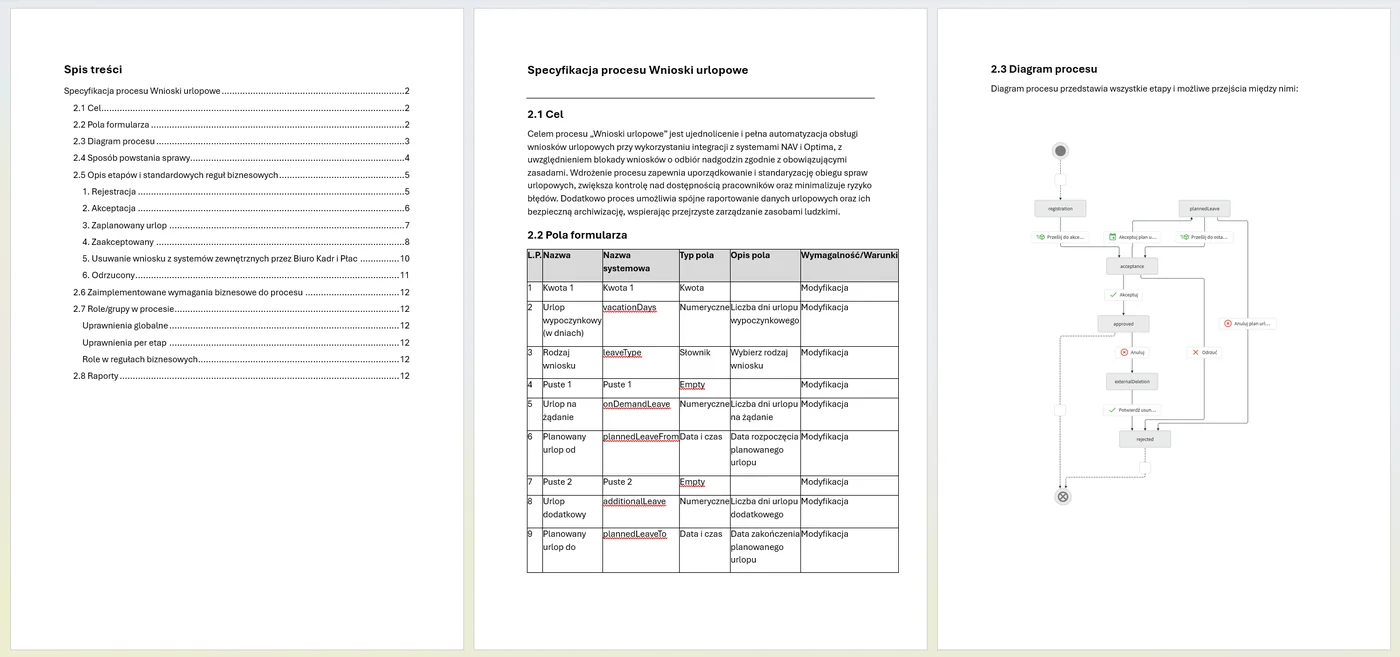
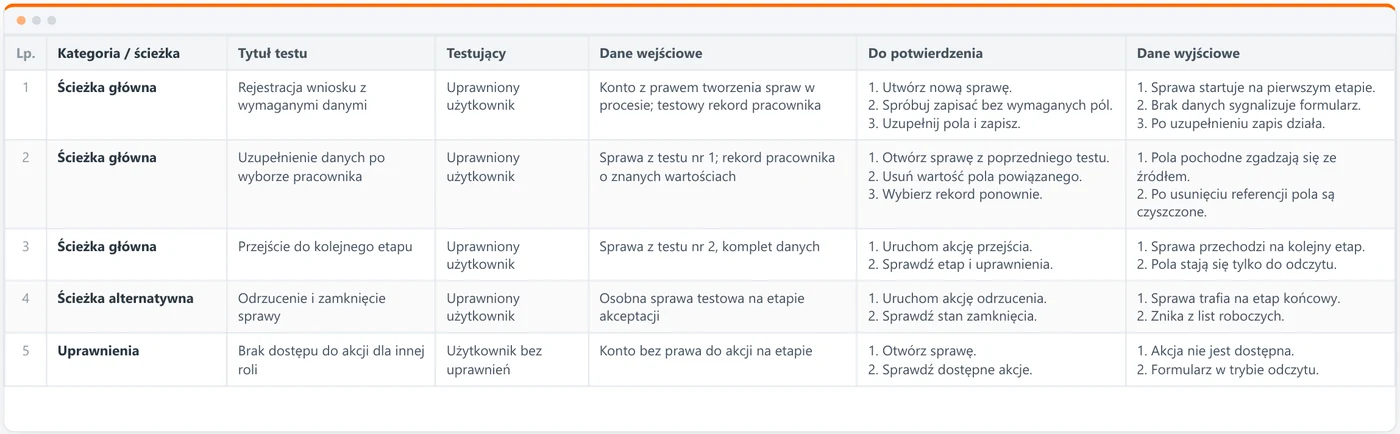
We prepare process documentation and test cases with AI based on the live configuration. The people responsible for the process review them.
The problem, owner, documents, decisions, exceptions, and deadlines.
Permissions, paths, escalations, and data exchange with systems.
Forms, workflow, notifications, and reports.
Generated from the configuration and aligned with what actually works.
User training, launch, and ongoing support.
Document workflows often contain personal, confidential, and sensitive data. We therefore design permissions, auditability, environments, and integrations around the organization's requirements and the regulations applicable to the specific process.
Security and regulatory compliance AMODIT security on amodit.comPricing reflects the real process flow, integrations, and accountability, not just the number of forms.
Steps, exceptions, escalations, and differences between companies or departments.
Permissions, delegation arrangements, approvals, and how mobile users work.
Forms, archives, initial data, and rules for transferring existing cases.
ERP, HR and payroll systems, signatures, KSeF, email, and reporting.
Access, audit, and environment requirements, and the number of acceptance scenarios.
The scope of AMODIT licenses, deployment model, and accountability after launch.
Describe one process: where it starts, who makes decisions, and which systems exchange data with it. We will prepare the scope after understanding the process.
No. AMODIT exchanges the data required for the process with systems already in operation.
Yes. A good starting point is a frequent process with a clear owner and a visible problem: delays, manual retyping, or missing status information.
AI reads documents, prepares information, documentation, and tests, and recommends the next actions. The recommendation goes to the person designated in the process for approval.
It depends on the number of processes, integrations, data migration, exceptions, and testing scope. After understanding the process, we prepare the scope and quote.
On amodit.com, the product website.
In the first conversation, we will identify the process, dependencies, and data required to prepare the scope.